AI Sovereignty or AI Dependency? India’s Big Choice in the Age of American Tech
Artificial Intelligence is emerging as the next big technological wave, and India is right in the middle of this wave. At the recently concluded India AI Impact Summit, leaders from across the world, including companies such as OpenAI and Google, identified India as one of the biggest markets for the future adoption of AI. While this is a huge opportunity, it also leads to one crucial question: Will India continue to be a consumer of Western-developed AI solutions, or can it develop its own AI ecosystem? With India moving ahead with its own sovereign AI initiative and encouraging startups such as Sarvam AI, this question of dependency versus self-reliance becomes more pertinent than ever.
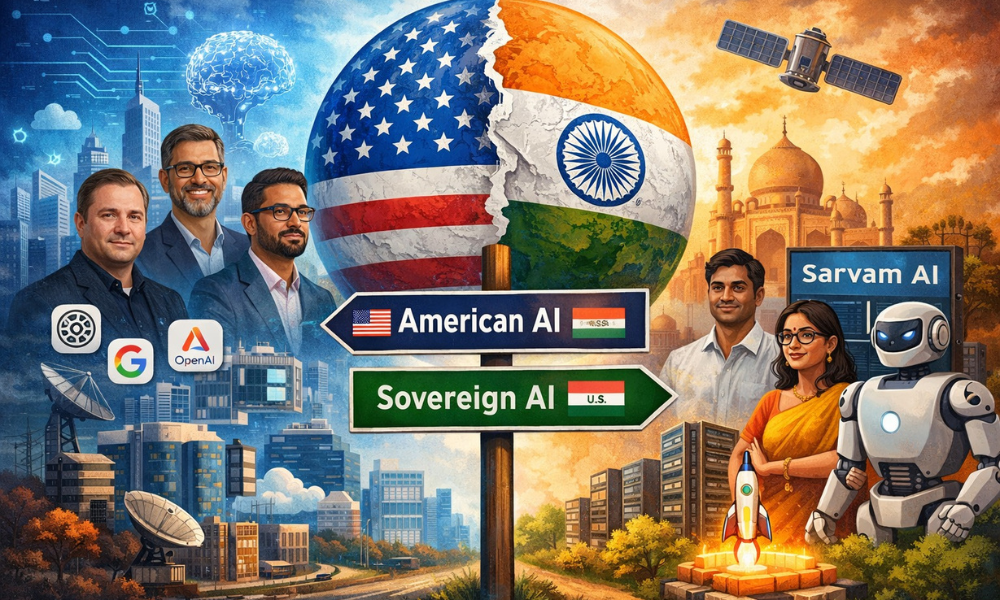
The American Pitch – India as the World’s Largest AI Consumer
At the India AI Impact Summit, some of the biggest names in the global AI industry pointed to India as one of the largest opportunities for AI adoption. Sriram Krishnan was one such leader who encouraged Indian companies to make use of “our AI stack,” which is essentially the American AI infrastructure. Sam Altman also pointed to India as one of the largest AI markets in the world. Sundar Pichai and Dario Amodei also shared similar views, as they showcased their companies as technology enablers who are ready to fuel the AI adoption in India
It is clear that American companies are pitching themselves as the producers of the best AI systems in the world, while countries such as India are pitched as the large consumers of AI. By partnering with Indian companies in the education, fintech, and e-commerce space, these companies are essentially integrating their AI infrastructure into the Indian digital landscape. While this is a great way to get access to the latest technology, it also raises concerns about being dependent on foreign AI infrastructure.
Could the AI boom in India parallel 1990s IT situation?
The current AI boom in India has strong similarities to the IT boom in the 1990s. Back then, many Indian companies such as Tata Consultancy Services, Infosys, and Wipro rapidly expanded their businesses by providing software development services to customers outside of India using technology that was developed in western countries to deliver their services. For example, many Indian companies are using Amazon Web Services as a technology partner; however, there are no Indian companies that operate a global cloud computing network.
While it is true that India has established itself as one of the world’s leading IT service providers, the growth of the sector over the last 30+ years has resulted in an imbalance in the way that technology is created. Indian companies provided service while western companies developed and maintained the infrastructure on which those companies delivered services. Therefore, while many of the wealthiest companies in the world have benefited greatly from the growth of the IT sector in India, many of the wealthiest companies in the world have continued to be the most powerful.
Many people are now concerned that the same type of imbalance will repeat itself in the AI sector. Like with IT in the 1990s and beyond, Indian companies may continue to act as service providers rather than as innovators in the creation of core technologies.
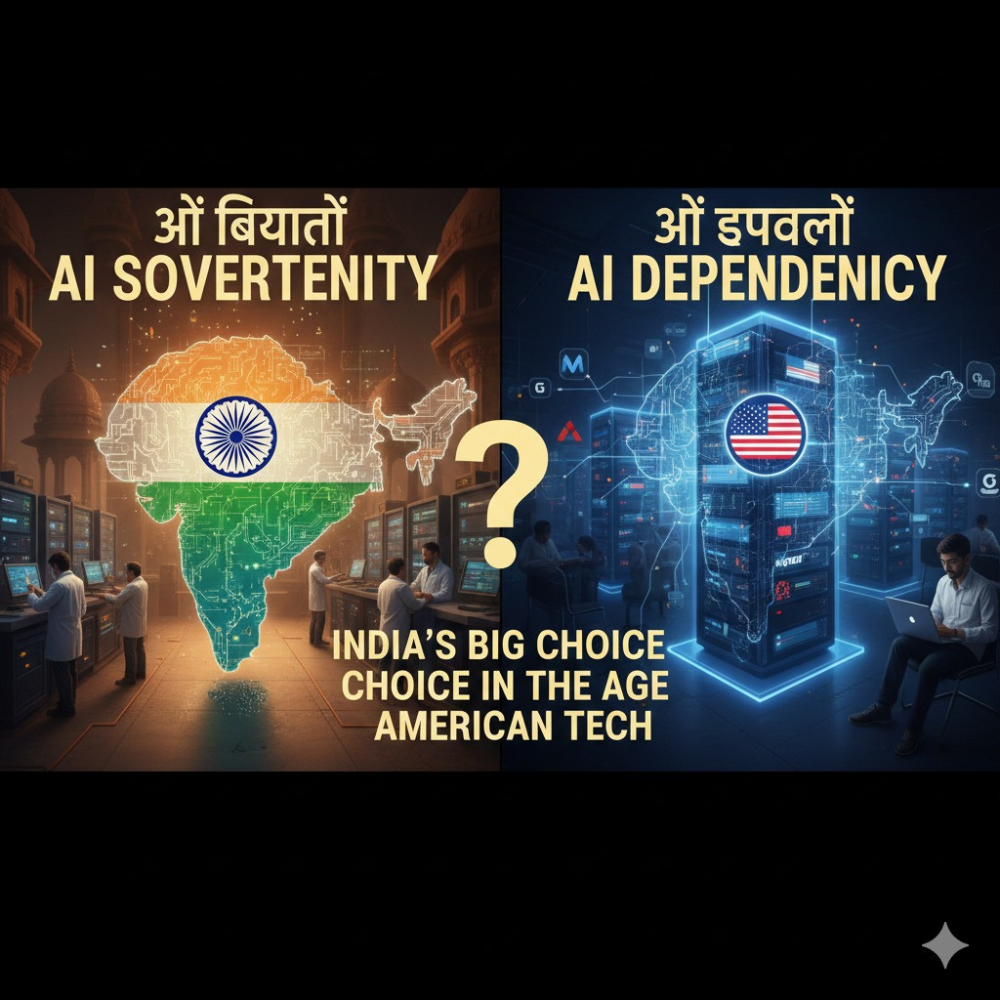
India’s Push for Sovereign AI
Unlike the 1990s, India is now a stronger economic power and has greater strategic insight. In a world where geopolitics and technology rivalry are defining trends, many nations are now focusing on digital sovereignty. The Indian response to this global reality is evident in its “India AI Mission,” which seeks to develop India’s own AI capabilities and not rely on foreign infrastructure.
The government has made major announcements regarding investments, including Rs 4,500 crore for AI development and establishing a 38,000 GPU computer cluster that will be available to startups, researchers, and innovators at subsidized rates. This is a long-term vision that seeks to empower Indian companies to develop, train, and deploy their own AI models in the country. The idea of sovereign AI is not one of isolation but of ensuring that India retains control over key digital technologies.
Will India be a Source of Domestic AI Innovation?
The advent of domestic businesses participating in India’s AI opportunity , including new startups such as Sarvam AI, is one of the leading advances in India’s development within the Artificial Intelligence arena. Sarvam AI introduced its own series of large language models at the India AI Impact Summit, an important achievement in India’s technological goals. While smaller than other systems engineered by Open “AI “, Google, and Anthropic; these systems are an excellent first step towards self-sustainability.
Success of these businesses may change the role of India in the global AI community from solely consuming imported methods of AI to using and creating domestic AI methods. This change would give India a robust international partnership and enhanced methods for developing India’s domestic high-technology infrastructure. The success of domestic innovation in the area of AI, if appropriately supported , could lead to India having a very different story to tell about AI than the story for information technology.
Conclusion
India is at a critical point in its technology evolution. Although collaborating with international leaders in AI can help the country grow faster and innovate, the key to success lies in striking a balance between the two approaches. If India chooses to invest in its own AI and at the same time continue to engage with the international community, the country can transcend its role as a mere consumer and become a strong producer in the international AI community.