Celebrating Chaitra Navratri 2026 in Gujarat : Devotion, Power & Spiritual Significance
Chaitra Navratri is one of the most sacred and spiritually enriching festivals celebrated across India, and in Gujarat, it holds a special place in the hearts of devotees. While Gujarat is globally famous for the vibrant Garba celebrations during Sharad Navratri, Chaitra Navratri is observed in a more peaceful, devotional, and spiritually focused manner. In 2026, this auspicious festival will once again bring devotees together in prayer, discipline, and devotion, marking the beginning of a new spiritual cycle.
Significance of Chaitra Navratri
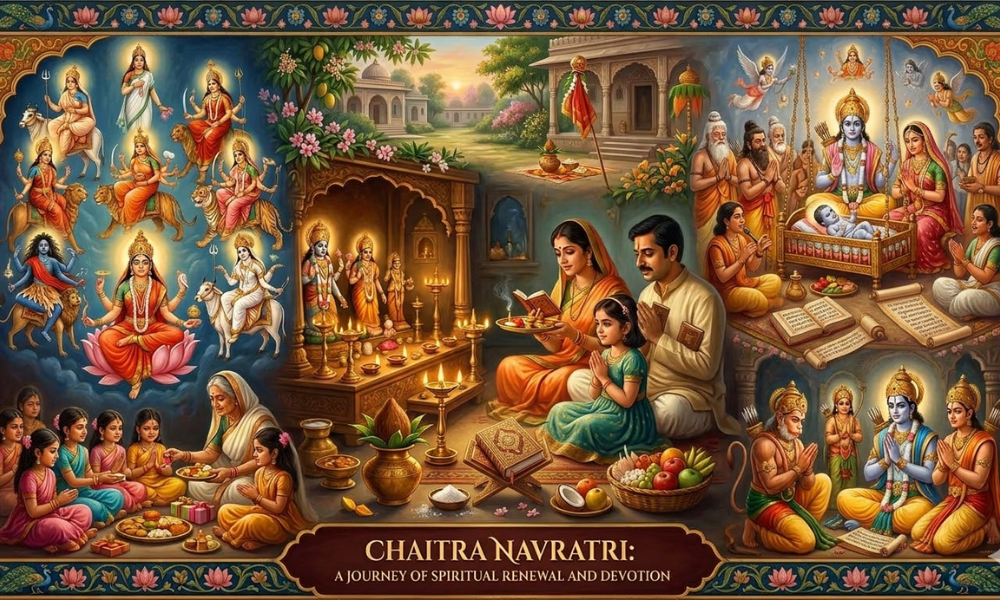
Celebrated during the Hindu month of Chaitra (March–April), Chaitra Navratri marks the onset of the Hindu New Year in many parts of India. It is dedicated to the worship of Goddess Durga and her nine divine forms, known as Navadurga. These nine days symbolize the journey of spiritual awakening, self-purification, and inner strength.
In Gujarat, devotees observe this festival with deep faith and simplicity. The focus is less on grand public celebrations and more on personal devotion, temple visits, fasting, and prayer rituals. It is a time to disconnect from worldly distractions and reconnect with spiritual values.
Navadurga: The Nine Forms of Power
Each day of Chaitra Navratri is devoted to a different form of Goddess Durga, representing various aspects of power, wisdom, and protection:
- Day 1 – Shailputri: Symbol of purity and strength
- Day 2 – Brahmacharini: Represents devotion and penance
- Day 3 – Chandraghanta: Embodies courage and grace
- Day 4 – Kushmanda: Creator of the universe
- Day 5 – Skandamata: Represents motherhood and care
- Day 6 – Katyayani: Symbol of bravery
- Day 7 – Kalaratri: Destroyer of darkness and fear
- Day 8 – Mahagauri: Symbol of peace and purity
- Day 9 – Siddhidatri: Bestower of wisdom and spiritual powers
Devotees in Gujarat worship these forms with daily prayers, aarti, and offerings, seeking blessings for prosperity, health, and protection.
Rituals and Traditions in Gujarat
The festival begins with Ghatasthapana (Kalash Sthapana), where a sacred pot is installed in homes or temples to invoke the presence of the Goddess. This ritual marks the beginning of the nine-day celebration.
Fasting is a key part of Chaitra Navratri in Gujarat. Many people observe strict fasts, consuming only fruits, milk, and special fasting foods like sabudana khichdi, rajgira puri, and singhada flour dishes. Others follow a sattvic diet, avoiding onion, garlic, and non-vegetarian food.
Daily aarti and chanting of devotional songs create a spiritual atmosphere in homes and temples. Devotees also recite sacred texts like Durga Saptashati and engage in meditation.
On the eighth or ninth day, Kanya Pujan is performed, where young girls are worshipped as forms of the Goddess. They are offered food, gifts, and blessings, symbolizing respect for feminine energy.
Spiritual Importance of the Festival
Chaitra Navratri is not just a festival but a period of deep spiritual significance. It is believed that during these nine days, divine energy is at its peak, making it an ideal time for spiritual practices.
In Gujarat, many devotees use this time for self-reflection, meditation, and inner cleansing. Fasting helps detoxify the body, while prayer and chanting purify the mind. This combination leads to a sense of peace, clarity, and spiritual growth.
The festival teaches the importance of discipline, faith, and positivity. It encourages individuals to overcome negative emotions such as anger, greed, and fear, and replace them with love, compassion, and devotion.
Celebration in Temples and Communities
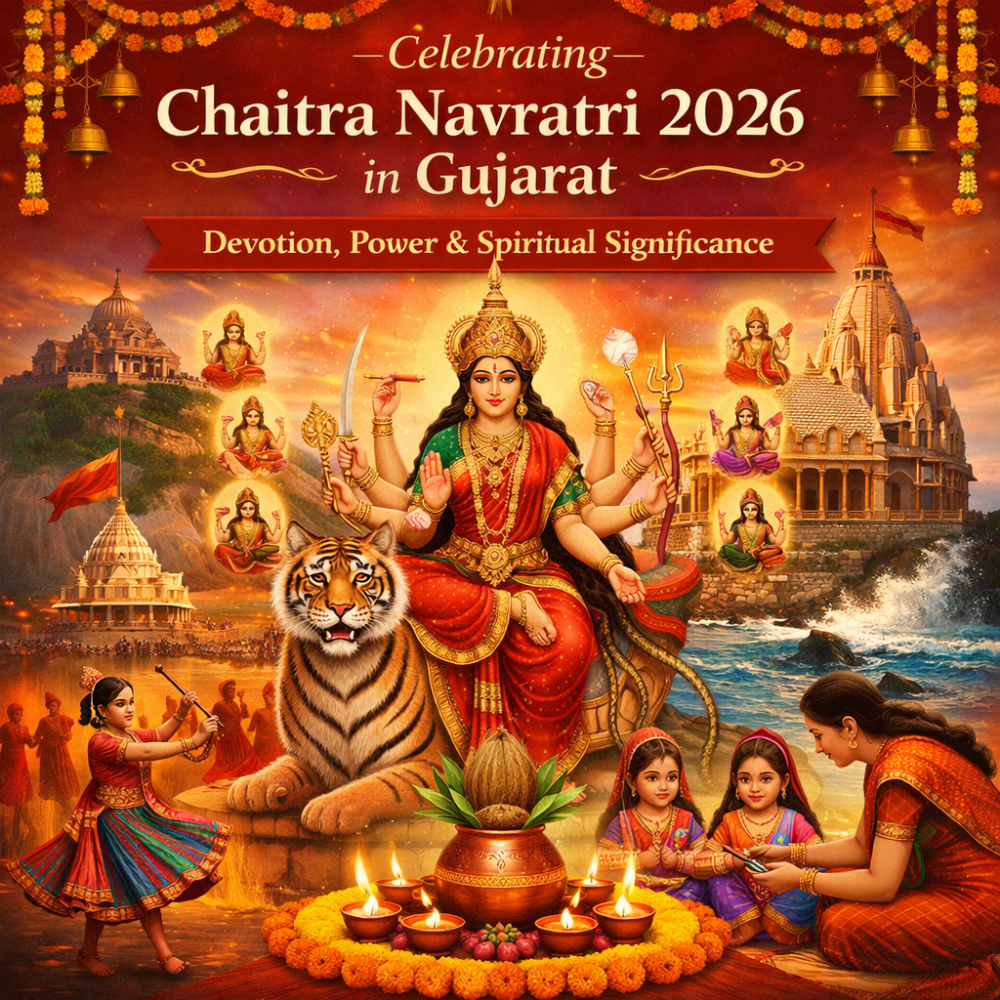
Temples across Gujarat become centers of devotion during Chaitra Navratri. Places like Ambaji Temple, Pavagadh Temple, and local Mataji temples witness a large number of devotees offering prayers and seeking blessings.
Although the celebrations are quieter compared to Sharad Navratri, some communities organize small Garba gatherings and devotional programs. These events are more focused on spirituality rather than entertainment.
Families come together to perform rituals, prepare fasting meals, and share the joy of devotion. The festival strengthens social and cultural bonds within communities.
Connection with Ram Navami
Chaitra Navratri concludes with Ram Navami, the birth anniversary of Lord Rama. This day holds great importance as it symbolizes the victory of truth and righteousness.
In Gujarat, Ram Navami is celebrated with temple visits, bhajans, and special prayers. The connection between Navratri and Ram Navami highlights the balance between divine feminine and masculine energies, emphasizing harmony in life.
Modern Relevance in 2026
In today’s fast-paced world, Chaitra Navratri 2026 offers an opportunity to slow down and reconnect with one’s inner self. In Gujarat, where life is often busy and dynamic, this festival provides a much-needed spiritual pause.
Many people are now combining traditional practices with modern lifestyles. Online aartis, digital prayer groups, and community events make it easier for younger generations to stay connected with their cultural roots.
The festival also promotes healthy living through fasting, mindful eating, and mental discipline. These practices are highly beneficial in maintaining overall well-being.
Conclusion
Celebrating Chaitra Navratri 2026 in Gujarat is a beautiful blend of devotion, power, and spiritual significance. It is a time to honor the divine feminine energy, seek blessings, and focus on personal growth.
Through fasting, prayers, and rituals, devotees cleanse their minds and bodies, preparing themselves for a new beginning. The festival reminds us that true power lies within us and that with faith and determination, we can overcome any challenge.
As Gujarat celebrates this sacred festival, the essence of Chaitra Navratri continues to inspire people to live with devotion, strength, and positivity. It is not just a celebration but a journey towards spiritual awakening and inner peace.