How Pidilite Built Fevicol into a Cultural Icon Brand
In India, Fevicol is more than a brand of glue – it is a household name and a cultural icon. Fevicol has become synonymous with bonding, and it is not uncommon to see Fevicol advertisements in carpenters’ workshops and school classrooms. The success of Fevicol is a marketing lesson that few companies can match. The company that owns the Fevicol brand is Pidilite Industries.
From Industrial Adhesive to a Household Essential
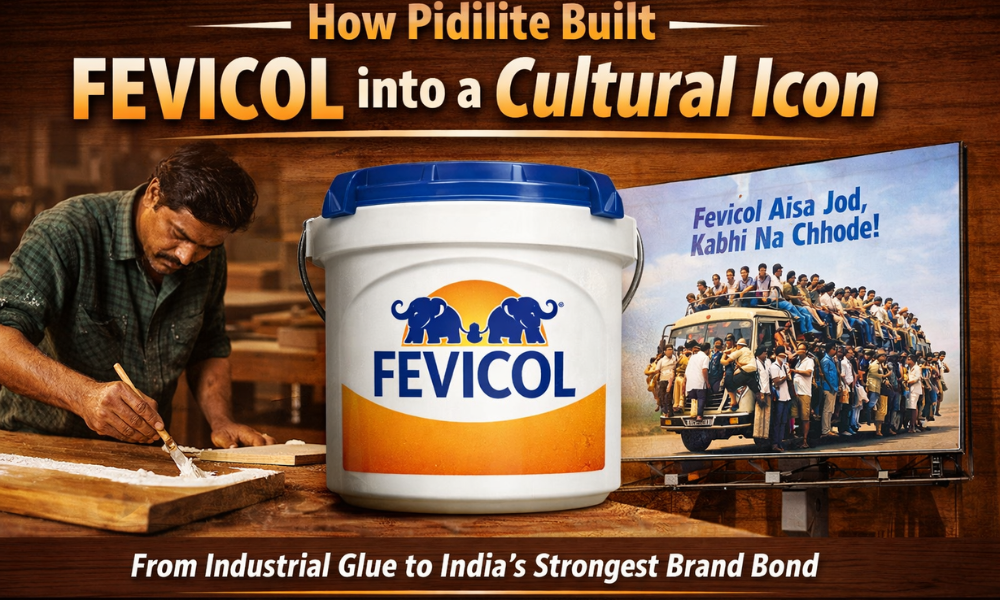
The launch of Fevicol by Pidilite Industries in 1959 was a time when adhesives were mostly industrial in nature and were used by carpenters and manufacturers. However, the company realized that there was a huge market waiting to be tapped in the form of the rising middle-class households in India. Instead of confining the use of Fevicol to the industrial sector, Pidilite decided to market it as a dependable adhesive solution for households, schools, and small businesses. With the rising trend of urbanization and the growing demand for modular furniture, Fevicol naturally became the go-to adhesive solution for its strength and durability. The marketing campaign centred on the theme of “strong bonding” that would last for many years, making it an emotionally comforting purchase for consumers buying furniture. By making the product usage easier and providing smaller and more affordable packs, Pidilite Industries made it accessible to all, thus turning Fevicol from an industrial adhesive to a household essential in India.
Advertising That Sticks: The Genius of Fevicol’s Campaigns
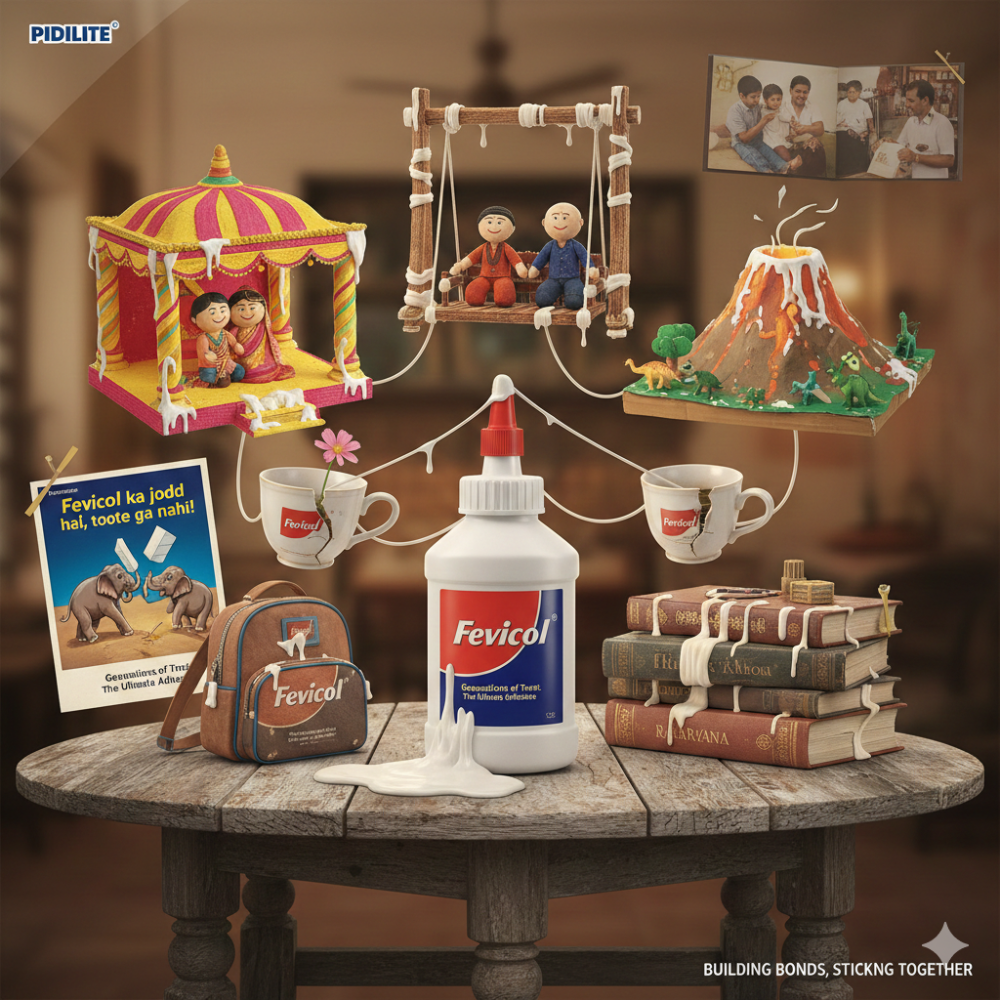
The advertising of Fevicol has made them a pop culture phenomenon. They work with creative agencies to develop advertising campaigns that are humorous, relatable, exaggerated and showcase the unmatched strength of their product. For example, Fevicol’s commercials have featured overcrowded buses never coming apart and eggs that can’t be pulled apart but instead come apart easily. Fevicol’s commercials are not only advertisements for their products but also great pieces of storytelling, which has helped to build a connection between the brand and rural or urban parts of India. The company also tries to stay away from technical specifications about their product and incorporate Fevicol into everyday use of the word through examples like “Fevicol Jaisa Jod” meaning “connection like Fevicol”. In addition, the company has used consistent messaging throughout its history to create brand recall, while variations in the overall theme were kept to a minimum. By investing in advertising even when other companies were primarily focused on low price, Pidilite was able to ensure that people remember Fevicol more than any other brand. As a result of this, Fevicol not only developed high levels of advertising awareness but emotionally connected to a large number of consumers turning adhesive glue into an item of popular culture.
Deep Distribution Strategy: Reaching Every Corner of India
In order for Fevicol to be a dominant force within the industry, Pidilite developed a distribution network that was critical to its success as well as being extensive across both urban and rural regions through many different types of retail establishments.
By having an understanding of the way the retail ecosystem of India is fragmented, Pidilite was able to assure that its product could be found at the majority of locations, regardless of whether they are major hardware stores or small, local convenience stores.
This easy access to Fevicol made it possible for carpenters, contractors, and builders to have a reliable and readily accessible adhesive solution to their project needs. Additionally, through loyalty and incentive programs, Pidilite developed strong relationships with its dealers and prevented competing brands from getting shelf space at these same locations. Furthermore, by providing various sizes of product packaging, such as small and large containers, Pidilite was able to meet the needs of customers with differing price points and usage preferences. As a result of Fevicol’s last-mile distribution, Fevicol became the default adhesive simply by virtue of being readily available and being the most trusted brand by customers in a number of different geographic locations.
Therefore, we can see through Pidilite’s extensive last-mile penetration, that brand building alone will not lead to market leadership; instead, having a strong distribution capability will determine which company leads a particular market.
Innovation of Products and Brand Trusts, along with Extending Lines of Products
Advertising creates recall; while trust is built through consistent quality. Fevicol established a reputation in India for its durability, water resistance and through the ability of the product to perform reliably in Indian weather. Pidilite has continued to innovate with products in its portfolio; by improving the quality of adhesives and developing innovative formulations to create innovative solutions for changing needs of furniture and building construction markets. In addition to the adhesive product, Pidilite has extended their line of products by adding Fevikwik and Fevistick to provide solutions for quick-fix jobs and for school use, providing the company another way to leverage the trust equity created with Fevicol across multiple categories of adhesive products. The company has also engaged their customer base of carpenters through training and experience programs, as well as through loyalty programs; thus developing a relationship between its professional advocates and the company over time to help cement their respective customers’ loyalty to the entire product family of Pidilite. Through a combination of trust, innovation, and strategic line extensions, Pidilite has developed Fevicol from being a single product into an empire of adhesive products; thus making it to be much more than a single glue brand for customers in India.
Conclusion
Pidilite Industries was able to turn Fevicol from a mere adhesive to a name synonymous with strength and trust in India. Fevicol’s story is a testament to the fact that with the right strategy, even the most mundane product can be turned into a cultural icon.