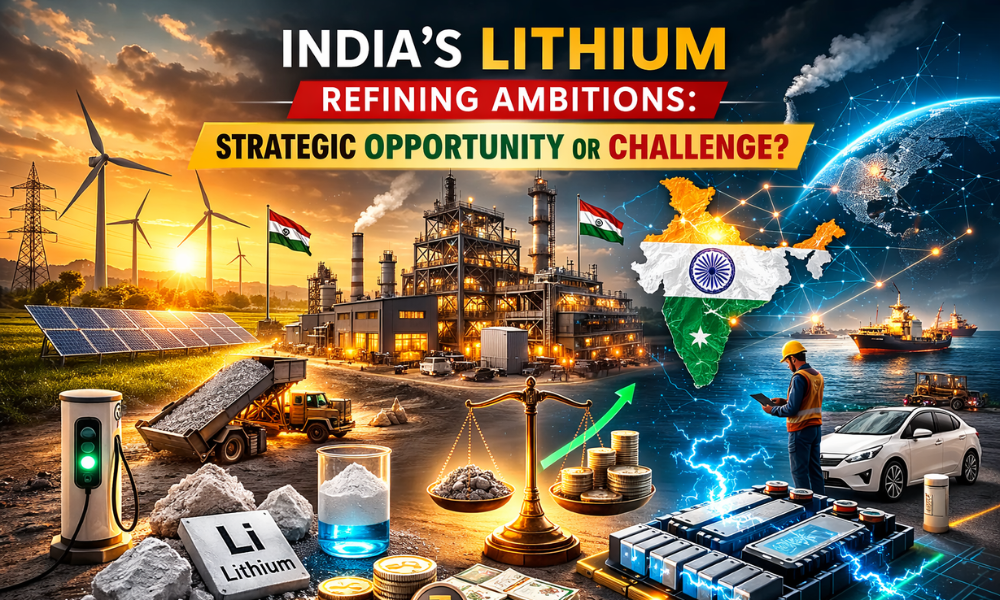
India’s Lithium Refining Ambitions: Strategic Opportunity or Challenge
Lithium has proved to be one of the most strategic resources of the 21st century, fueling electric vehicles, energy storage solutions for renewable energy, and the global transition to clean energy. As India accelerates its transition to electric vehicles and battery manufacturing, the need for a reliable source of lithium has become a national imperative. While mining is a significant aspect, refining lithium into battery-grade material is where the true value addition lies. The Indian effort to develop its own lithium refining industry is a huge strategic opportunity and challenge.
Growing Lithium Demand in India: EV & Energy Storage Drive
The demand for lithium in India is set to escalate as the adoption of electric vehicles and energy storage solutions becomes the key driver of the country’s growth plans. With the country’s ambitious plans to adopt electric vehicles on a large scale and the rapid development of solar and wind energy capacity, the demand for high-performance batteries is set to escalate. The government’s plans to promote the adoption of electric vehicles through the FAME scheme and the Production Linked Incentive (PLI) scheme for ACC batteries are set to give a boost to the country’s battery manufacturing plans. However, the fact is that India is currently importing most of its lithium-ion batteries and battery-grade chemicals. As the adoption of electric vehicles increases in the country’s two-wheeler, passenger car, and commercial vehicle segments, the demand for lithium is set to multiply several times over the next decade.
Import Dependency vs. Domestic Refining Capacity
India relies significantly on imports to meet its lithium supply chain needs. Unfortunately, China is known as one of the largest, if not the largest, lithium-refining country in the world, meaning most of the refined lithium, regardless of where it originated from, will be processed into battery-grade lithium carbonate or lithium hydroxide in China. Such a high concentration of lithium refining is also creating a highly dependent, and vulnerable, supply chain for India, especially during times of elevated geopolitical tensions or supply chain disruptions. Refined lithium is a critical component in the production of batteries and is the most value-added segment of the lithium supply chain, requiring highly sophisticated chemical processing and a significant investment of capital to establish.
Developing domestic refining capacity will provide India with the opportunity to minimise supply chain risks, capture more value locally, and support the continuing growth of India’s battery manufacturing ecosystem. There are, however, several key challenges and considerations when establishing lithium refining plants in India, including complex environmental approvals, a skilled workforce, and long-term contracts for the supply of raw materials. The question remains whether or not India will be able to scale up fast enough to remain competitive on the global stage while ensuring cost-effective operations and sustainable development.
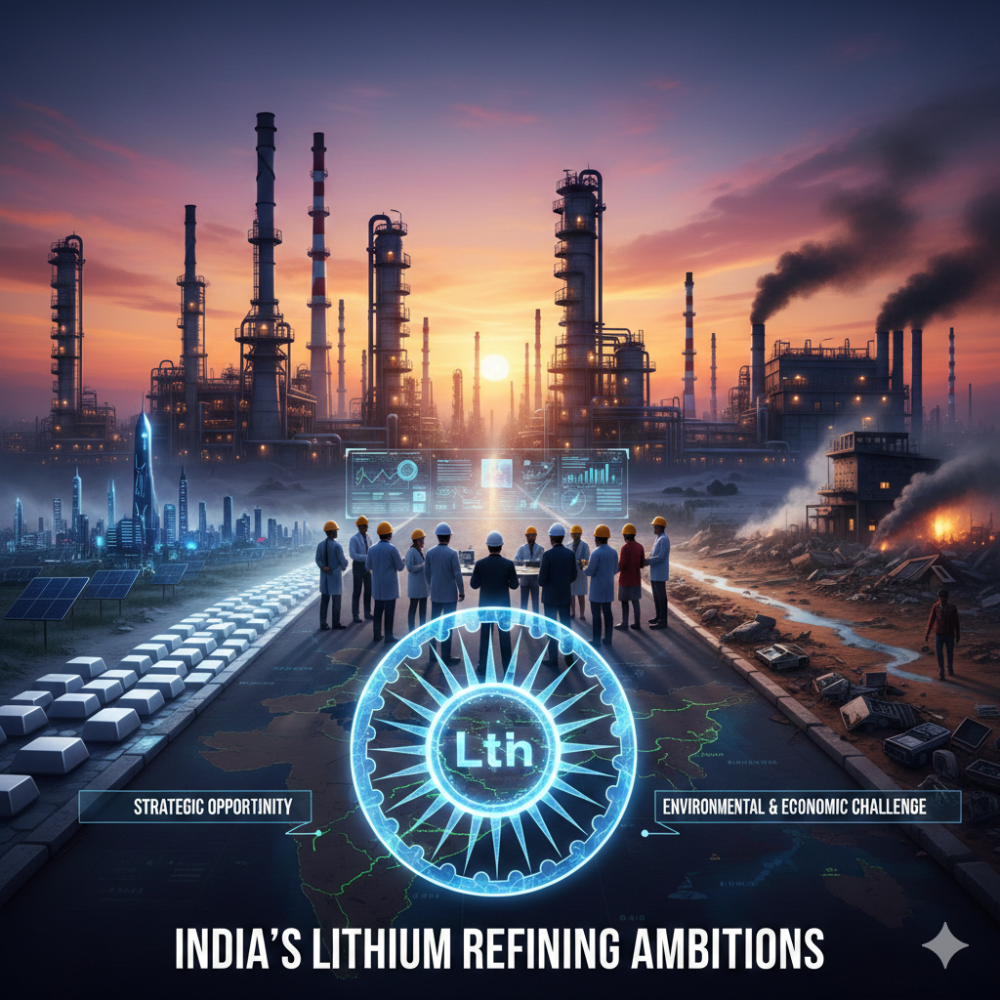
Geopolitical & Strategic Importance of Lithium
The geopolitical and strategic significance of lithium has grown drastically, and it is now often compared to oil in terms of how profoundly it will affect economies around the world in the future. Countries are competing to acquire lithium resources and processing capabilities so that they can dominate the clean energy supply chain. The largest processing capacity in the world comes from China, but both the US and Europe are committing large investments aimed at developing alternative sources. For India, joining the lithium processing industry goes beyond a business opportunity; it is about achieving strategic autonomy. As the world moves toward electric vehicles and decarbonization, nations that control the battery supply chain will hold tremendous economic power. India’s involvement in global mineral partnerships and the pursuit of overseas lithium projects shows that this is a strategic imperative for India. On the other hand, the current status of geopolitics will create price fluctuations and supply disruptions, so it will be critical for India to find a balance between building domestic capacity and engaging in international cooperation in order to secure a place in the rapidly evolving global energy market.
Infrastructure, Technology & Environmental Challenges
While lithium refining is an ambitious industry for India, large investment of capital and chemical engineering, secured access to the lithium feed stock, and an ability to deal with the higher energy and water usage of lithium refining, presents a significant challenge to currently establish refining capability within the country. Further, new refining plants need to comply with domestic environmental regulations while providing cost competitiveness, and there are technological obstacles that will need to be addressed, as the incumbent companies that currently have built lithium refining capacity own both the proprietary methods and operational experience to do so. Finally, the volatility of the global lithium pricing market creates a risk to long-term capital investment from India’s government and/or private entities in a commercial lithium refining facility. The support of infrastructure, including both logistics and port connectivity as well as reliable electrical power, will also be central to achieving success. Therefore, there will be considerable opportunity if executed correctly; there is the high potential for failure if not executed properly for India to as a country to achieve its ambitions for lithium refining.
Conclusion
India’s lithium refining plans are where opportunity and risk of execution meet. While the demand for EVs and the need for energy transition provide a strong foundation for growth, developing refining capacity is a capital-intensive and technologically complex process. If done correctly, India can enhance its domestic refining capacity and make its presence stronger in the international battery value chain. The next decade will tell whether lithium will be India’s strength or a lost opportunity.