Indias ship building Industry – The next big export opportunity
The shipbuilding industry in India is on the verge of becoming a strong growth area with export potential. Although India has a small presence in the global shipbuilding industry, the government is actively encouraging the industry through its policies. With its long coastline, qualified workforce, and increasing maritime trade, India has the potential to become a large global shipbuilding destination. As the demand for commercial and green ships rises globally, the shipbuilding industry in India can become the next big export opportunity for the country.
Current Status of India’s Shipbuilding Industry
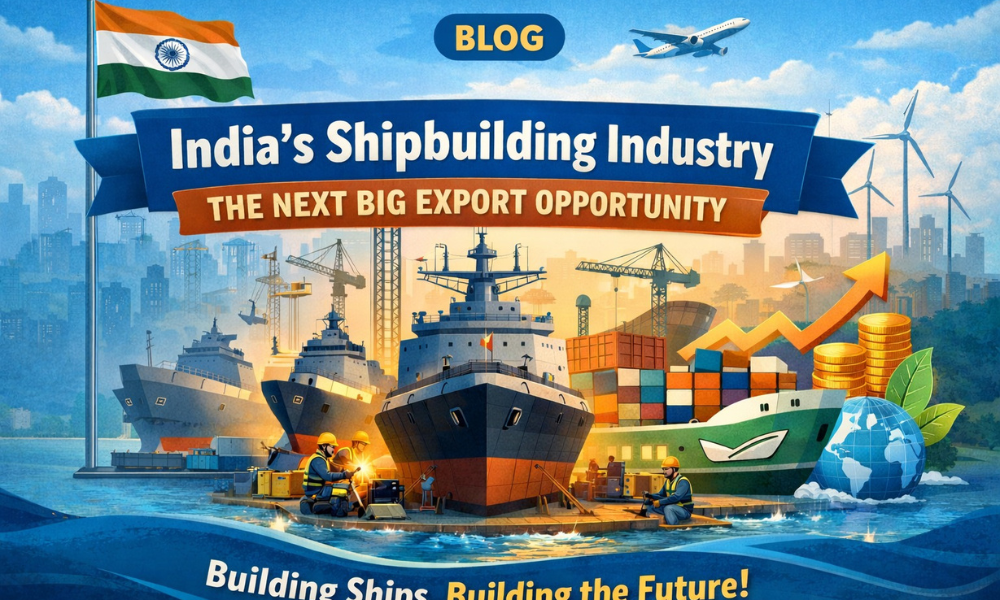
The current status of the shipbuilding industry in India is that it is still in the developing stage compared to the world leaders, such as China, South Korea, and Japan. Currently, the share of India in the world shipbuilding industry is very small. However, India has some well-established shipyards, such as Cochin Shipyard Limited, Mazagon Dock Shipbuilders Limited, and Garden Reach Shipbuilders & Engineers. These shipyards are primarily engaged in building defense ships, offshore ships, and some commercial ships. India has very strong capabilities in ship repair and ship recycling. However, despite having skilled labor and cost competitiveness, the industry is facing some challenges, such as outdated infrastructure, lack of private investment, and lack of competitiveness in the global market. However, with increasing government support and modernization, India is slowly but steadily increasing its presence in the global shipbuilding industry.
Government Strategy and Economic Development via Policy and Vision
Shipbuilding has been identified as a key market sector for India’s economic growth through exports by the Indian Government. Strategic visions such as the Maritime India Vision 2030 project and the Amrit Kaal Vision 2047 Project will allow for significant increases of India’s market share within global shipbuilding. To stimulate domestic production, incentive packages through financial assistance, tax benefits and subsidies will be created by the Indian Government. The “Make in India” Initiative is focusing efforts on reducing foreign built ship dependencies. Modern shipbuilding clusters, improved port infrastructure/equipment, and “green” and “sustainable” shipbuilding technologies will all receive technical and development attention from India’s Government as well. Exports and attracting foreign investments are areas of particular focus under these policy initiatives. The Indian Government implemented these policies will further position India as a competitive Global Shipbuilding location for years to come.
Why Shipbuilding is the Next Big Export Opportunity
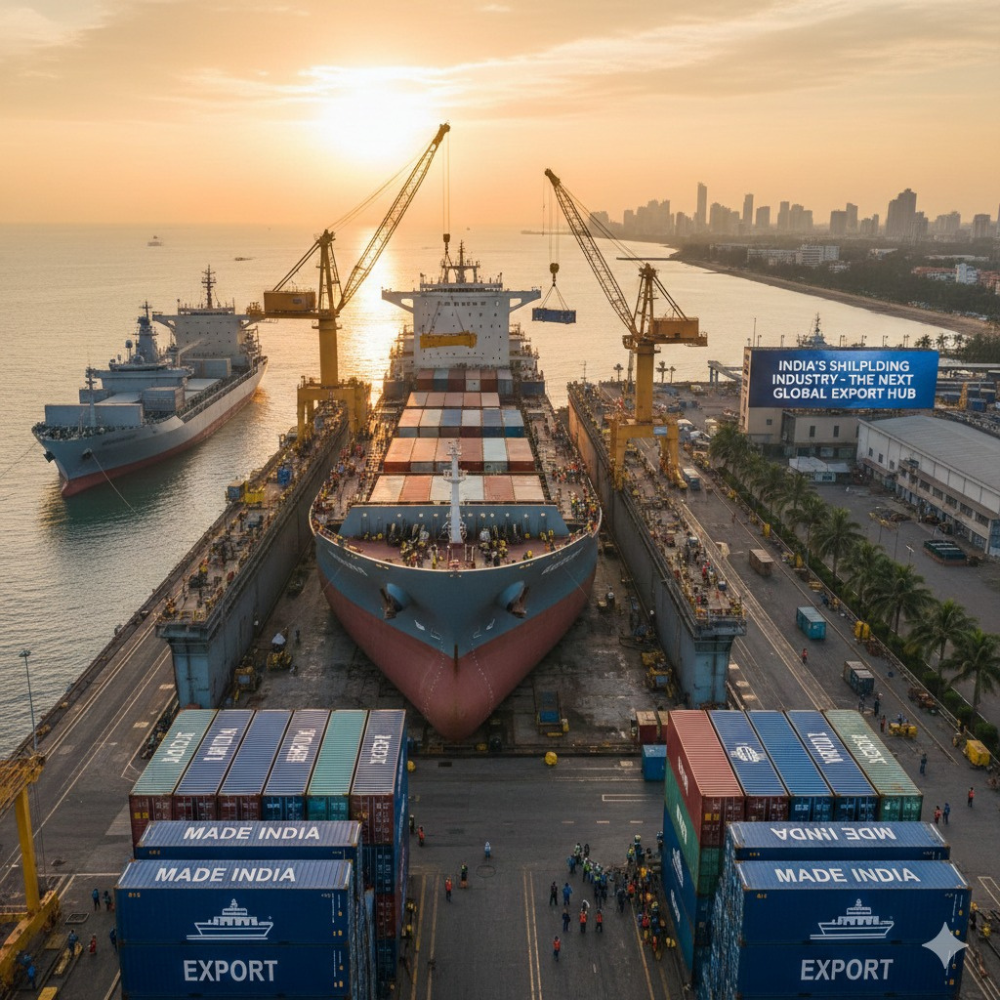
Global trade, maritime security and environmental regulations, are driving up global ship demand. Countries want new ships built to lower fuel consumption while also lowering their impact on the environment. India has significant capabilities are to meet this increased ship demand because it has lower labor costs, strong technical skills, proximity to major sea routes, and access to many natural resources to produce ships. By building a strong Indian shipbuilding industry, India can generate foreign currency, reduce its reliance on foreign shipping companies and create large number of jobs in multiple sectors such as manufacturing, engineering, and logistics. Additionally, with global corporations looking for other manufacturing locations as alternatives to China, India can position itself as an acceptable and capable shipbuilding location for those businesses. With proper evolution of the industry, shipbuilding could potentially become one of India’s topestablishedex export-dependent industries.
Challenges, Competition & The Road Ahead
India’s shipbuilding industry faces significant competition from China, South Korea, and Japan, which dominate the global market. These nations have advanced technology, large manufacturing capabilities, and strong government support. India’s challenges include inadequate infrastructure, extended delivery times, and financing difficulties. Additionally, there is very little private participation in shipbuilding. To address these issues, India needs to modernize its shipyards, employ advanced technologies, enhance productivity and reduce costs. It is also critical to promote public-private partnerships (PPPs) and establish skills training initiatives within the industry. With sustained government support, innovation, and effective strategic planning, India has the potential to succeed despite the numerous barriers faced today. If ongoing investments are made in infrastructure development and enhancing India’s global competitiveness in shipbuilding, then India’s future will be bright.
Conclusion
The shipbuilding sector in India has immense potential to become a major export driver in the coming years. With the support of the government, geographical advantages, and a skilled workforce, the sector is slowly but surely moving towards becoming globally competitive. Despite the challenges of infrastructure development and competitiveness in the global market, the sector in India can overcome these hurdles with constant investment and innovation. If the current growth trend continues, the shipbuilding sector can become one of the most promising export opportunities for India.