The Business of Data Centers: Why Big Tech Is Investing in India
India is quickly becoming a global data hub. With the increasing number of internet users, the growth of digital services, and the adoption of cloud technology, the demand for data storage and processing has increased exponentially. Global tech giants are now pouring money into the data center market in India to tap into this explosive growth. Various factors are now making India the next big destination for hyperscale data centers.
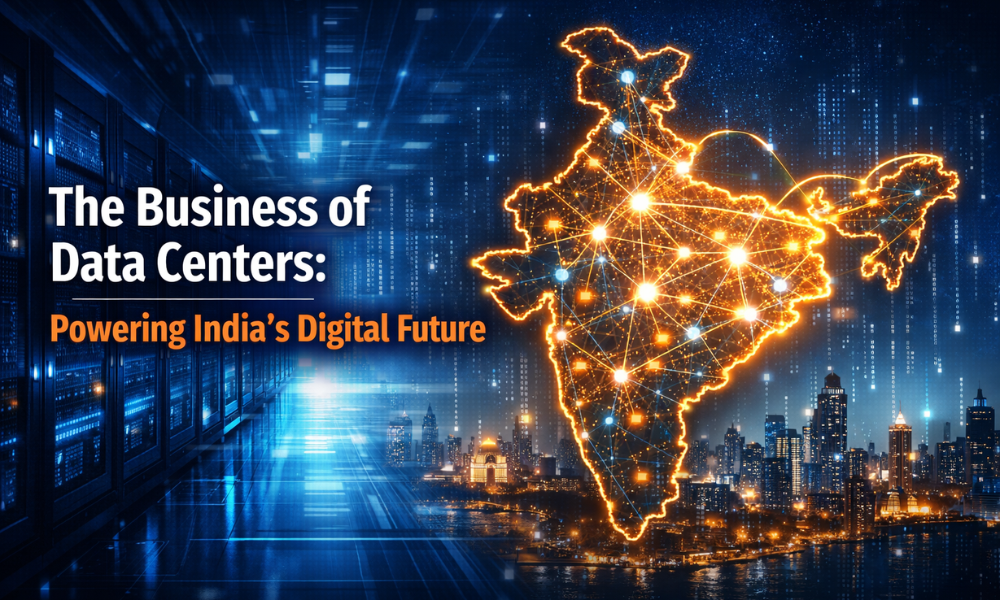
India’s Explosive Digital Growth and Data Consumption
India has emerged as one of the fastest growing digital economies globally. With more than 800 million internet-savvy citizens, affordable mobile data, and the rapid adoption of smartphones, digital consumption has grown at an unprecedented rate. The emergence of 5G networks, the growth of OTT platforms, digital payments, e-commerce, gaming, and social media usage have all contributed to a substantial increase in data generation. Enterprises are also embracing cloud computing, artificial intelligence, and data analytics to expand their operations and deliver better customer experiences. The massive data generation happening in the country demands safe, fast, and low-latency infrastructure in the country itself. This means that companies cannot depend entirely on foreign servers anymore. The demand for faster connectivity, better performance, and data sovereignty is compelling global cloud leaders and hyperscale’s to set up massive data centers in India, making it an important digital infrastructure destination in Asia.
The Data Localization Laws and Government Policy Frameworks
India’s policy framework has been integral in facilitating the development of data centers through the government’s Digital India Initiative, enabling both businesses and public services to digitize and, therefore, requiring an increase in local data centre infrastructure. Emerging data protection regulations highlight the need for data localization (i.e., storing and processing certain data categories) and securing both national security, data privacy, and digital sovereignty, through developing support for expanded digital infrastructure. In addition, state governments are providing incentives such as land grants, electricity price discounts, and expedited project approvals to attract large-scale data centre projects. Finally, with the recognition of data centres having an “infrastructure” designation, access to financing and investment is significantly enhanced. Therefore, this type of regulatory/policy framework creates a level of confidence by global technology companies to invest billions of dollars in the developing Indian data centre ecosystem.
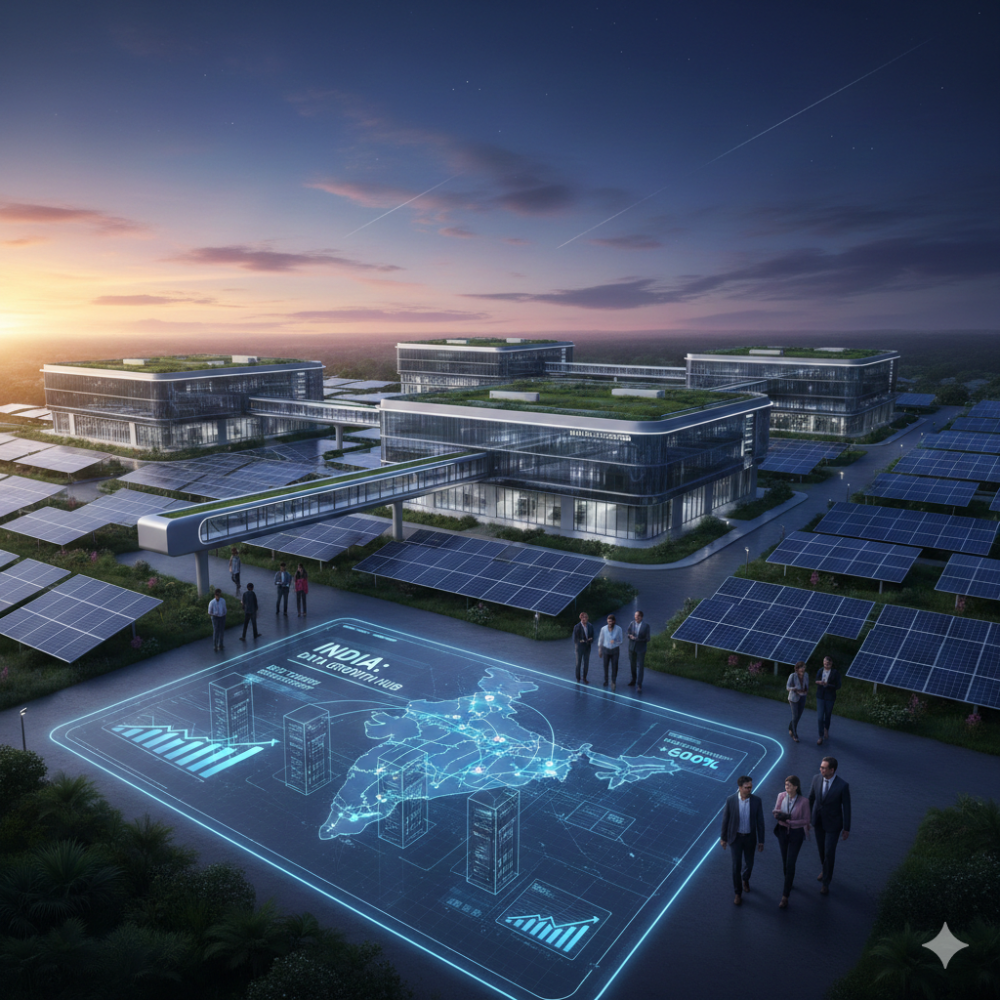
Cost Advantage, Infrastructure Expansion, and Strategic Location of India as a Data Center Hub
India has a significant cost advantage versus developed markets. With lower real estate prices, low-cost labour, and increased availability of power, data centre development is becoming economically viable at a large scale. The major metros, namely Mumbai, Chennai, Hyderabad, and Bengaluru, serve as emerging data centre markets and offer reliable terrestrial and submarine cable connectivity.
In addition, India’s geographic location offers strategic proximity to the Middle East, Africa, and Southeast Asia; Japan and offers a favourable view as a digital gateway service provider to the region. Further, the exponential growth of renewable energy projects is supporting sustainability initiatives of international hyperscale operators who wish to operate more sustainably.
As fibre networks continue to expand and improvements are made to the electrical grid, India is creating a robust platform for high-capacity, energy-efficient data centres to meet the growing demand from enterprise and cloud service providers.
The Digital Economy of India and how Big Technology is Investing in the Future
Worldwide technology giant corporations and clouds industries are allocating billions toward hyperscale datacenters in India to support both larger institutions and smaller Start Ups Fintech Companies E-commerce Platforms etc. Alongside, they will support the Government’s Digital Initiatives through these same investments. The acceleration of AI ML and Large Language Models has led to increasing demand for next generation computing infrastructure by all industry vertical sectors migrating companies from on-premises computing environments into Cloud Data Centre ecosystems. With the continued growth of businesses migrating into Cloud environments more than ever before, establishing scalable secure Cloud Data Centre facilities will be required. Datacentre investments also underpin job creation, new employment opportunities through Construction Engineering Cybersecurity Facility Management. Additionally, as this ecosystem continuously expands it will continue to strengthen India’s Digital Economy, attract Foreign Direct Investments, position India as a Global Technology Hub, and create an economic foundation to support long term Economic Growth and Digital Transformation objectives for India.
Conclusion
The rise of data centers in India is more than just a trend in infrastructure. It symbolizes the increasing significance of India in the global digital landscape. With the increasing consumption of data, favorable government policies, and massive investments by global tech giants, India is emerging as a data hub. With the increasing digital transformation in various sectors, data centers will continue to be the backbone of innovation and growth.