The Business of Private Space Startups in India
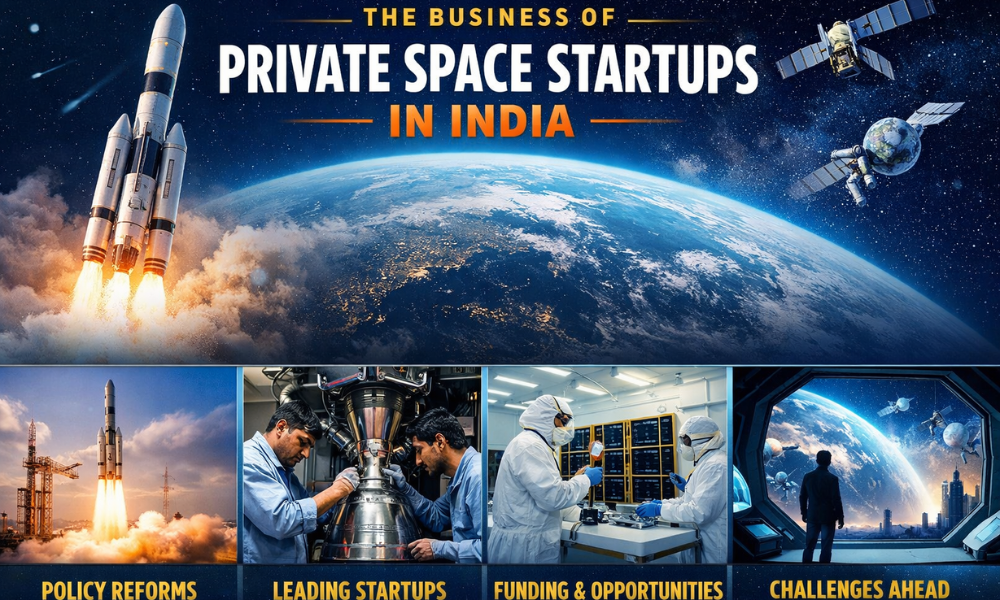
The space industry in India is no longer confined to government programs and scientific research. A new breed of private startups is turning the space industry into a lucrative business opportunity. After the historic policy change that opened the gates for private investment, entrepreneurs have started working on the development of rockets, satellites, propulsion systems, and space data platforms. The private space startups industry in India is now turning out to be one of the most fascinating new sectors in the country.
The Policy Paradigm Shift: How IN-SPACE and Space Reforms Opened the Doors
The private space sector in India was truly unleashed in 2020, when the government introduced historic reforms to open up the industry. For several decades, the space sector was a monopoly of ISRO, with very little involvement of the private sector, which was restricted to being a supplier. The establishment of the Indian National Space Promotion and Authorization Centre was a turning point, as it served as a single window regulator that enabled start-ups to use ISRO’s testing facilities, launch sites, and technical know-how. In addition to this, New Space India Limited was formed to commercialize space technologies and facilitate industry partnerships. This marked a paradigm shift in the space sector, as India paved the way for a competitive space industry that could cater to both domestic and international markets.
Key Players and Emerging Unicorns in India’s Space Economy
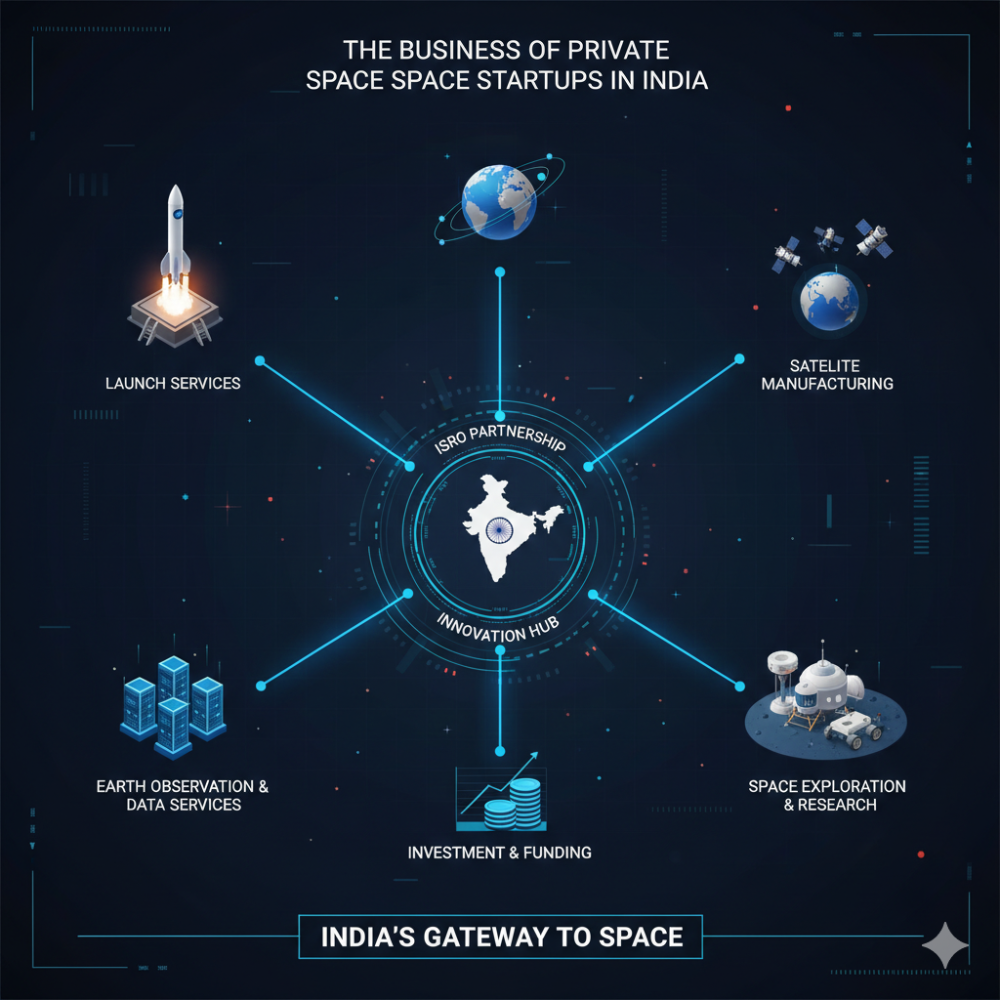
India’s space economy is currently evolving with many new and innovative startups using specialized and commercially focused business models to shape their own version of India’s larger space vision. Innovative startup companies including Skyroot Aerospace and Agnikul Cosmos are creating small satellite launch vehicles that are designed for low-cost (and therefore cost-effective) launches, and quick launch capabilities. Pixxel is developing a constellation of high-resolution earth observation satellites that will have the ability to provide agricultural and climate change data worldwide. Dhruva Space develops satellite platforms and provides end-to-end mission support, while Bellatrix Aerospace designs and produces advanced propulsion systems for use in space. Unlike the traditional government-based space program, these companies use nimble and agile structures to develop their business inside the niche areas of the global space economy like the launch of smallsats and the development of space-based analytics. Many of these companies are already signing international contracts to supply services to customers outside of India. Through the combination of engineering talent with engineering execution, these innovative startup companies will establish India as a serious player in the rapidly expanding global space economy.
Funding, Revenue Models, and Global Opportunities
Private space businesses require extensive monetary resources; however, Indian startups increasingly attract venture capital firms, strategic investors and government assistance. Funds for these businesses originate from both domestic venture capital firms and international investors with focus primarily on space; however, technology entrepreneurs also perceive long-term potential associated with orbital services. Funding models for businesses in the private space sector are wide-ranging across the ecosystem. Launch startups receive revenues for their commercial launched payload delivery contracts, while satellite companies earn revenue by providing either manufacturing or leasing of satellite capacity. Space data companies (i.e., earth observation firms) are able to monetise their revenues through paid subscription services providing analytics data for either agriculture, military defence or environmental monitoring. The importance of international demand for low-cost, reliable launch services is paramount, with the United States as one of the largest global markets for such services. Furthermore, India has a notable cost advantage when it comes to providing low-cost, high-quality engineering services, thereby giving Indian private companies a strategic competitive edge. Given the demand for satellites will continue to grow on a global basis as companies expand their broadband capabilities and monitor climate, Indian private space companies are strategically positioned to capture an equitable portion of this growing marketplace.
Challenges, Risks, and the Road Ahead
Despite the momentum of private sector investment in space (through startups) in India, the industry faces challenges. Space technology development involves:
– High up-front capital investments
-Lengthy periods of development time
-Technical risks where the failure of a single piece of technology could result in millions of dollars in lost revenue.
This has created an environment of significant uncertainty for businesses attempting to innovate and grow within the market. Although there are positive signs for regulatory clarity (e.g., Insurance Regulations; Capacity Allocation; Export Control Regulations), rules surrounding some of these areas remain uncertain and will continue to evolve. There is also increased competition from long established Global Players and/or Large Corporations, especially in the small satellite launch sector.
Access to Deep Technology Talent, and Advanced Supply Chains, remain significant challenges for private space companies within India.
Nevertheless, there is long-term optimism regarding the future of Private Space in India, based on the Government’s increasingly supportive Policy Framework, the growing confidence of Investors, and India’s Large & Diverse STEM Ecosystem. Ultimately, if Startups can achieve Operational Scale, secure long-term / Sustainable Funding, and leverage Global Partnerships, India has the potential to capture a significantly larger share of the Global Space Economy and transition away from being a Launch Services Provider to becoming a Full Spectrum Commercial Space Powerhouse.
Conclusion
The Indian private space sector is shifting from aspiration to implementation. With enabling policies, growing investor interest, and startups that are globally competitive, the sector is laying a solid commercial groundwork. Though there are still challenges, innovation and competitiveness provide a definite advantage to India. The space business of private startups is not only about launching rockets but also about developing a new high-growth industry.