The Politeness Paradox — When Being Nice Becomes a Form of Hiding
At times, being “nice” can be more complex than that. We say yes when we mean to say no, we smile when we are exhausted, and we apologize for just being here. In a world that prefers polite healthy interactions, many have become accustomed to using politeness like armor — a protective covering for anxiety, discomfort, or self-doubt. The Politeness Paradox explores this subtle tension in how kindness can serve as a form of hiding, and what it takes to show up authentically without losing softness.
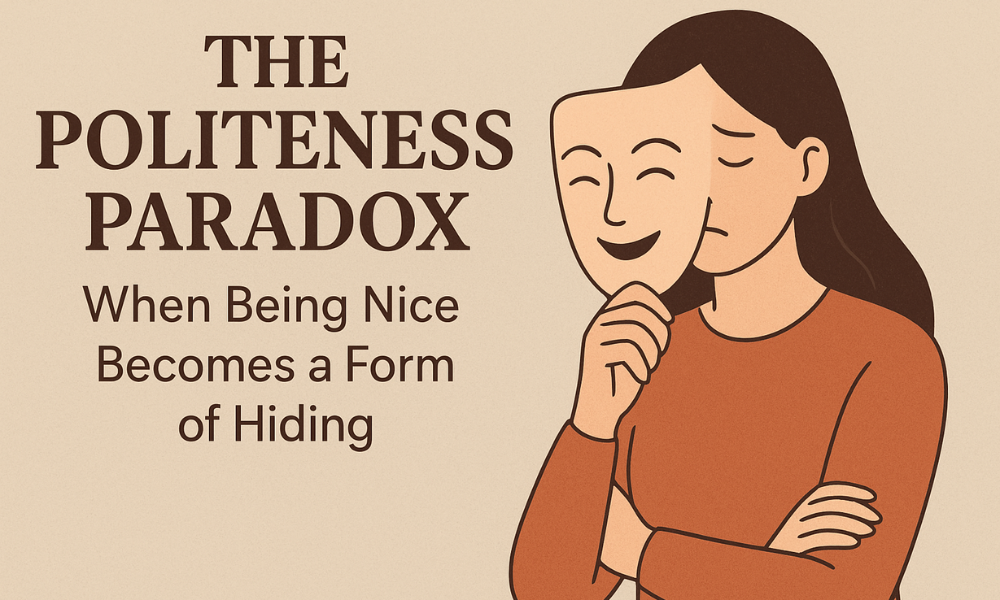
The Mask of Agreeableness – When Agreeableness Substitutes for Authenticity
Tackling the line between kindness and agreeableness can be a challenge. Many of us cross this line without realising it – we agree with opinions that are in opposition to our own, we soften our words into nontruths. It’s not that we are being dishonest; it’s that we have come to learn that harmony feels better than honesty. Over time, our need to be polite begins to choke us. We self-edit to make others feel comfortable and trim anything that may be “too much”. What starts as kindness, slowly turns into self-erasure. We modify ourselves into the version of ourselves that causes the least disruption – agreeable, pleasant, and mildly disconnected. However, we cannot fully connect with another person until we are all in and honest about who we are. Agreeableness is low risk. To be truly seen we may have to risk being slightly uncomfortable, we have to say the words that hesitate on the tip of our tongue. Authenticity does not always feel polite, but it is always truthful.
The Fear Behind the Smile — Why We Avoid Real Discomfort
Sometimes fear hides beneath our politeness — fear of rejection, disapproving, or even confrontation. Most of us have been conditioned to believe that it is safer to be liked than it is to be honest. We smile through our irritation, we agree to things that drain us and we act like we don’t mind when we are hurt. This isn’t weakness; it is simply a learned survival mechanism to be connected in a world that punishes connection. But the avoidance of discomfort does have a cost. We may start to confuse silence with peace or suppression with kindness. Feelings don’t just go away because we don’t articulate them — they simply move underground where they breed quiet resentment, or exhaustion, or both. The truth is, discomfort is not our enemy. Discomfort is the bridge to the truth and true connection. At the point we dare to honestly speak — even gently — and create space for real connection, not just polite performance. Sometimes the most caring thing we can do is admit the truth, even at the cost of a smile.

The Hidden Toll of Being “Too Nice” — Losing Our Boundaries and Our Voice
Being too nice often feels like a good thing – until it hurts. When we prioritize others over ourselves, we slowly lose ourselves. We say yes when we are swamped or stay silent when we feel wronged. We carry an emotional load that wasn’t meant for us in the first place. Over time – this pattern doesn’t just create burnout – it erodes our self. We no longer see boundaries and our voice becomes a polite whisper. Ironically, the greatest fear a people pleaser has – losing connection – often for real, when relationships are founded on compromise they are never authentic.
Kindness isn’t always self sacrifice – it’s reciprocity. It’s saying, “I care about you” AND saying “I care about me.” When we are able to communicate our limits we don’t approach kindness from lesser means – we show up as more whole, more honest, and more grounded. The world doesn’t need perfected forms of us. It needs our presence.
Redefining Kindness – From Pleasing Others to Respecting Truth
Real kindness doesn’t equal keeping everyone comfortable — it means being fully authentic. It’s the practice of speaking the truth with tenderness, of being honest without being cruel. When we redefine kindness in this way, it stops being a facade and begins to become a mirror — a reflection of both compassion and courage. It means understanding when it’s best to say no and not feel guilty about it and when to disagree and not feel angry for doing so. True kindness does not ask us to silence ourselves; it asks us to be authentic. Because caring deeply does not mean agreeing entirely; it means being brave enough to love honestly. Once we stop doing niceness and start doing truth, our relationships will deepen and become richer with authenticity. Kindness, in its truest sense, isn’t a conflation with who we are. It respects both ourselves and others enough to be authentic. After all, honesty with compassion overrides politeness any day in the art of healing.
Conclusion
Ultimately, it’s not about politeness — it’s if it is used to obscure reality. If kindness becomes a disguise, we miss out on honesty and intimacy. The brave act of being real, even when difficult, is what makes connection valuable. Real grace doesn’t mean making everyone happy — it means showing up as you, kindly and honestly.